
The short answer
HVAC maintenance is a scheduled inspection, cleaning, and tune-up that keeps your system cooling well and catches small problems early. In South Florida's near year-round cooling climate, regular service helps you avoid breakdowns, control humidity, and make informed repair or replacement decisions.
In South Florida, your air conditioner works most of the year. That steady workload wears down parts, clogs drains, and coats coils with dust and grime long before you notice a problem. Regular HVAC maintenance from SmartFix HVAC Repair Service helps your system cool evenly, control humidity, and run without surprise breakdowns. We serve homeowners in Coral Gables and nearby cities. This page explains how to tell your system is due for service, what a technician checks, how we help you decide between repair and replacement, what affects the cost, and what to expect during a visit.
Signs Your System Needs Maintenance
Many problems start small and get worse over weeks or months. Booking maintenance when you notice early warning signs is usually simpler than waiting for the system to stop cooling on a hot afternoon.
Climate plays a big part. Miami Beach, just across the bay, has a wet season from May through October, with frequent afternoon thunderstorms. November through April is sunnier and less humid. Across the area, air conditioning runs for most of the year, so systems here rack up far more operating hours than those in cooler parts of the country.
If you notice any of the following, it's time to schedule a visit:
- Rooms that feel warmer or more humid than they used to
- The system runs longer cycles or rarely shuts off
- Weak airflow from the vents
- Water near the indoor unit or a drain line that backs up
- Musty smells when the system starts
- New noises such as rattling, buzzing, grinding, or squealing
- Ice on the refrigerant lines or the indoor coil
- Higher electric bills without a change in how you use the system
- Dust building up faster than usual around the house
What We Check During a Maintenance Visit
A maintenance visit covers both the indoor and outdoor equipment. Our goal is to clean what affects performance, test what tends to fail, and give you a clear picture of your system's condition.
Hurricane season runs from June 1 to November 30. A visit before or during the season is also a good chance to check how well the outdoor unit is secured and to look for debris or storm damage around it.
- Air filter condition and size, with replacement or cleaning as needed
- Evaporator coil and blower for dirt buildup that restricts airflow
- Condensate drain line and pan, cleared to prevent clogs, leaks, and mold growth
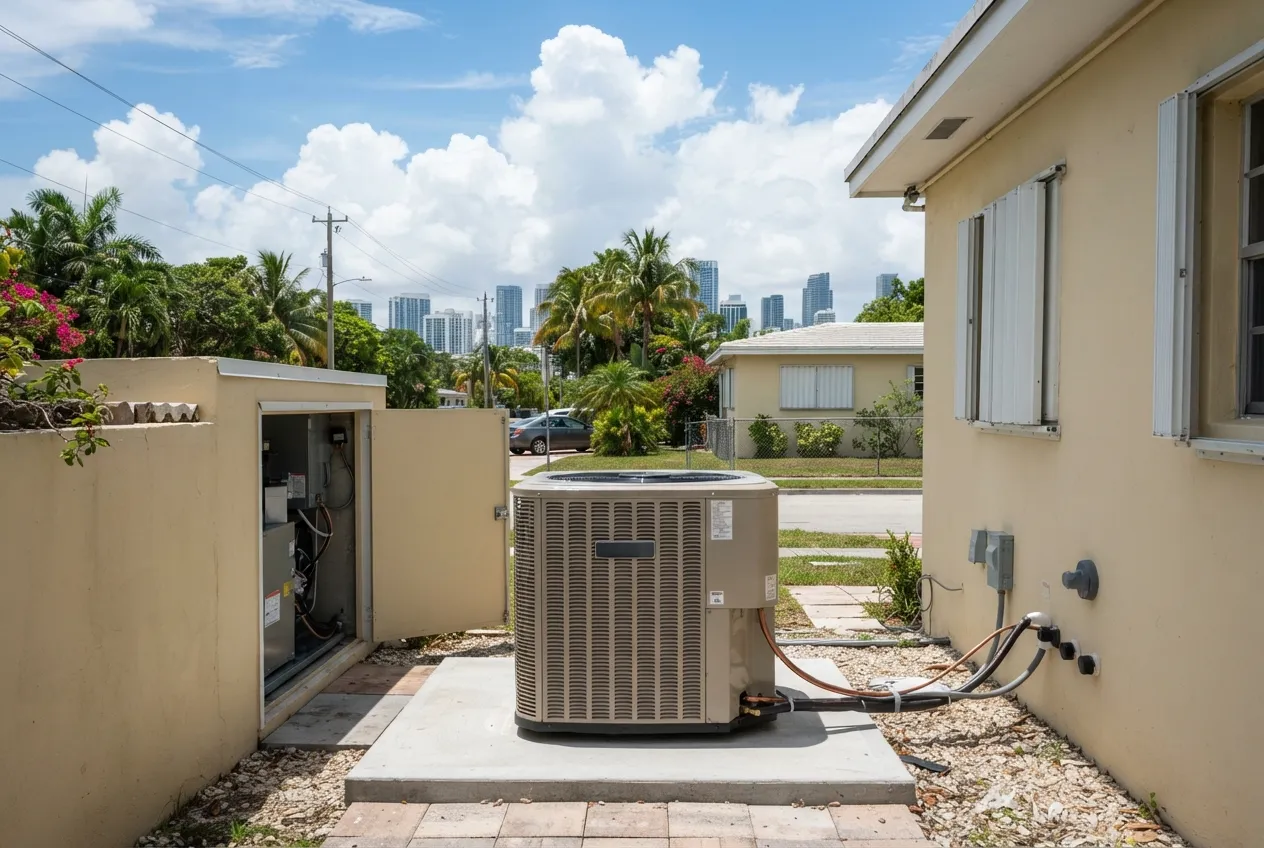
- Outdoor condenser coil, cleaned and checked for bent fins or blockages
- Refrigerant operating pressures and temperatures, checked for signs of a leak
- Capacitors, contactors, and electrical connections, tested and tightened
- Motors and fans for wear, noise, and proper operation
- Thermostat settings and calibration
- Temperature difference between supply and return air
- Ductwork at accessible points for gaps or disconnected sections
- Outdoor unit clearance, level pad, and condition after storms
Repair or Replace: Making the Right Call
Maintenance often turns up issues that need attention. When that happens, we explain what we found, show you photos when it helps, and lay out your options. You decide what to do next.
Repair usually makes sense when the system is in reasonable condition and the problem is limited to a single part, such as a capacitor, a fan motor, or a clogged drain. Replacement is worth discussing when the system has frequent breakdowns, needs a major component like a compressor, has an ongoing refrigerant leak, or can no longer keep your home comfortable.
If you're considering a new system, Florida Power & Light runs a Residential HVAC program that offers rebates on qualifying high-efficiency central air conditioners and heat pumps. Rebates go through participating contractors at the time of installation. We confirm the current program terms before we include them in a quote. Note that the federal Energy Efficient Home Improvement Credit (25C) only covered qualifying heat pumps placed in service before December 31, 2025. It is not available for new installations after that date.
What Affects the Cost of Maintenance
Every home and system is different, so the cost of a visit depends on what your equipment needs. We explain the scope of work before we start, so you know what's included.
- Number of systems or zones in your home
- System type, such as a split system, heat pump, or package unit
- How long it has been since the last service
- How dirty the coils, blower, and drain line are
- Access to equipment in attics, closets, or tight spaces
- Whether parts, filters, or refrigerant are needed
- Any repairs you approve after the inspection
How a Maintenance Visit Works
When you book, we ask a few questions about your system and any problems you've noticed. That helps the technician arrive prepared.
On site, the technician starts by talking with you about how the system has been running. Then they inspect and clean the indoor and outdoor equipment, test the electrical parts and refrigerant performance, and check airflow and the thermostat. Most of the work happens at the air handler and the condenser, with minimal disruption to the rest of your home.
When the work is done, the technician walks you through what they found. You'll hear what was cleaned or adjusted, what looks healthy, and anything that needs attention now or should be watched. If a repair is recommended, we explain why and let you decide. We'll also suggest a maintenance schedule that fits how hard your system works.